Shadow work is the practice of turning towards the parts of ourselves we would rather not look at: the reactions that catch us off guard, the feelings we tuck away, the qualities we judge in other people. It asks for honesty, patience and a good deal of kindness.
A crystal can't do that work for you, but many people find a stone helps them settle into it. A piece of obsidian in the hand or on the desk becomes a quiet cue to slow down, look inward and stay with whatever comes up.
What is shadow work?
The idea comes from the Swiss psychiatrist Carl Jung, who used the word "shadow" for the parts of our personality we push out of awareness. They aren't only difficult traits. Jung believed the shadow also holds strengths we never let ourselves use: creativity we were told was impractical, anger that could become healthy boundaries, a playfulness we were expected to grow out of.
Shadow work is simply the habit of noticing these parts and getting curious about them. A strong reaction is often the doorway. When something irritates you far more than it should, it is worth asking what it might be showing you about yourself.
The aim isn't to fix or banish anything. It is to know yourself more fully, so that less of your life runs on autopilot.
Why obsidian?
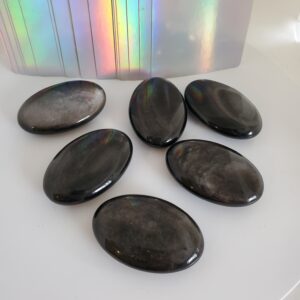
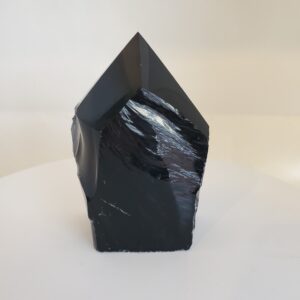
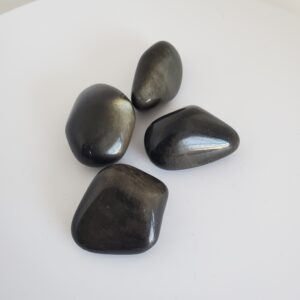
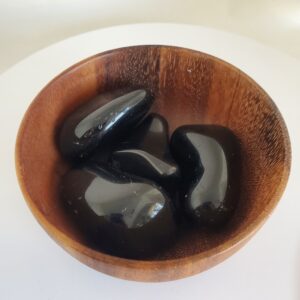
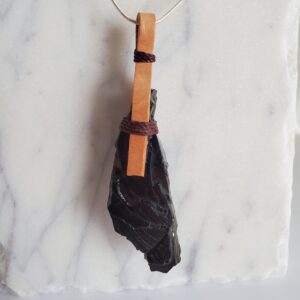
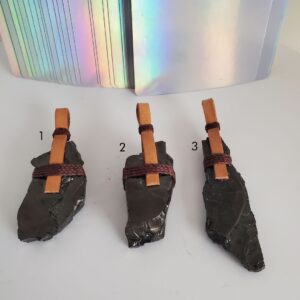
Obsidian is volcanic glass, formed when lava cools so quickly that crystals have no time to grow. Polished, it has a deep, glossy surface that reflects like a dark mirror, and polished obsidian mirrors were used for gazing and reflection in Mesoamerica and Europe for centuries.
That mirror-like quality is why obsidian is so closely tied to shadow work. In crystal traditions it is known as a stone of truth: direct, clear-sighted and a little unflinching. Holding it, or gazing softly into a polished piece, is a way of telling yourself you are ready to look.
Because of that reputation, many people keep black obsidian for deeper sessions and pair it with a gentler companion stone.
Other crystals for the journey
- Snowflake obsidian, with its soft grey markings, is often suggested as a gentler place to begin.
- Apache tears, small rounded pieces of obsidian, are traditionally kept close through grief and emotional release.
- Smoky quartz is a favourite for grounding, helping you take things in slowly rather than all at once.
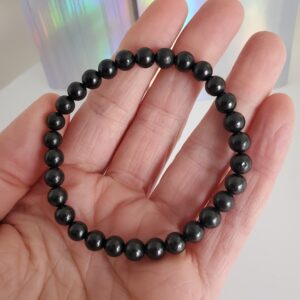
- Black tourmaline is held for a sense of protection and safe boundaries while you explore.
- Labradorite, with its hidden flashes of colour, is a lovely reminder that the shadow holds light and gifts as well.
A simple shadow work ritual
You don't need anything elaborate. Ten or fifteen quiet minutes is plenty.
- Settle in: find a spot where you won't be interrupted, hold your obsidian or set it in front of you, and take a few slow breaths.
- Choose one question: what annoyed me today, and why? What do I find hard to admit? What do I envy in someone else?
- Write freely: let the words come without editing or judging them.
- Pause when you need to: if it gets uncomfortable, put the pen down, hold a grounding stone such as smoky quartz and breathe for a moment.
- Close gently: note one thing you appreciate about yourself, then set the crystal down to mark the end of the session.
Caring for yourself along the way
Shadow work can stir up old memories and strong feelings, so go gently. Short, regular sessions tend to be kinder than long, intense ones. Many people like to cleanse their obsidian afterwards, with smoke, sound or a night beside a selenite plate, as a way of closing the space.
Crystals are a companion for reflection, not a replacement for professional support. If what surfaces feels heavy or stays with you, talking to a counsellor or therapist is a strong and caring next step.